January 29, 2026 | Peter Long, CEO
The 2026 K–12 Budget Landscape: What Education Marketers Need to Know
Planning for the 2026 K–12 budget year feels different than it has in the past. Districts are still moving forward, but many are doing so more cautiously—balancing evolving federal guidance, local funding realities, and longer internal decision timelines.
For education marketers and solution providers, this environment doesn’t call for guesswork or bold predictions. It calls for better timing, clearer messaging, and procurement-ready resources that align with how districts are actually planning and purchasing.
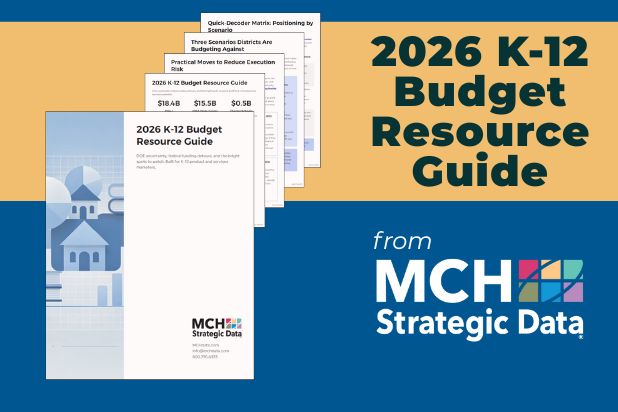
To support those efforts, MCH Data has released a free 2026 K–12 Budget Resource Guide, designed specifically for vendors and marketers navigating the year ahead.
Why timing and alignment matter more in 2026
In many districts, budget conversations are happening against a backdrop of uncertainty. Even when funding levels are expected to remain stable, the timing of confirmation and approval can vary—affecting when districts feel comfortable issuing RFPs, signing contracts, or launching new initiatives.
As a result, districts may:
- Take longer to evaluate solutions
- Require additional justification or approvals
- Favor phased approaches, pilots, or clearly scoped engagements
- Delay final commitments until later in the planning cycle
For marketers, this means success is less about volume and more about relevance and readiness.
A practical look at district planning cycles
One of the most common challenges education marketers face is misaligned outreach—sharing the right message at the wrong time. The 2026 K–12 Budget Resource Guide outlines typical planning and purchasing windows throughout the year, helping teams better synchronize campaigns, content, and sales enablement with district activity.
Rather than assuming a single buying moment, the guide highlights how district priorities evolve from early planning through final awards, and what vendors can do to stay useful at each stage.
Planning across funding scenarios - without overreacting
Instead of attempting to predict outcomes, the guide introduces a simple quick-decoder framework to help marketers adapt messaging across multiple funding scenarios. This approach allows teams to remain flexible and responsive while maintaining consistency in positioning.
The goal isn’t to react to every headline—it’s to be prepared with messaging and assets that support informed decision-making, regardless of how timelines shift.
Reducing procurement friction
Another theme throughout the guide is the importance of making evaluation easier for districts. Increasingly, districts expect vendors to provide clear, concise materials that support internal review and approval processes.
The resource includes an essential asset checklist, outlining materials that can help reduce friction, such as:
- Clear overviews of value and use cases
- Implementation and rollout summaries
- ROI or cost-justification narratives
- Pilot or phased engagement frameworks
Having these resources ready can help keep conversations moving - even when final decisions take longer.
Free resource for K-12 Marketers
The 2026 K–12 Budget Resource Guide is intended to support education marketers, vendor teams, and leadership stakeholders as they plan outreach and engagement for the year ahead.
If you’re looking to better align timing, messaging, and expectations with district realities in 2026, you can download the guide here:




Need More Time?
Due to inactivity, you will be logged out within 5 minutes.
To stay logged in, please select Stay Logged In.
 Logout